
When My Sister Left, Restaurant Security Guard Said To Me, ‘I Saw Her Pour Something Into Your Juice
The moment the security guard leaned in and whispered, “Ma’am, I saw your sister pour something into your drink,” my name, Hortensia Bloom, stopped meaning safety. I looked at that champagne glass, the one Vanessa handed me, with a smile I used to believe in, and realized it wasn’t love shining in those bubbles. It was betrayal. I didn’t flinch. I didn’t ask why. I just smiled because I finally understood what kind of war I was in. That night, I wasn’t her sister anymore. I became her reckoning, and I was going to make sure the truth had the last word.
Charleston shimmerred under soft golden lights when I walked into the tasting room. I arrived early, old habits die hard. The place was elegant, polished, full of laughter that didn’t quite reach the eyes of the people making it. Vanessa appeared in a champagne-colored dress glowing under the chandeliers.
“You actually came,” she said, voice, rehearsed.
“Of course,” I smiled. “It’s not every day you open your first restaurant.”
She ordered champagne for both of us. I asked for water, but when the server brought the glasses, she insisted. “To us,” she said, raising her glass. I lifted mine, pretending.
When she left the table to greet guests, I stayed still, watching the bubbles rise and die. Then, a low voice broke through the music.
“Ma’am, may I have a word?”
I turned. The security guard, older, steady, eyes too honest, leaned closer. “I saw your sister pour something into your drink,” he murmured.
My heartbeat didn’t spike. It steadied.
“Are you sure?”
“Yes, ma’am. Small vial, clear liquid.”
I thanked him, slid the champagne aside, and smiled as Vanessa returned.
“You haven’t drunk yet?” she teased.
“Waiting for the toast,” I said evenly.
Later outside, the seab breeze cut through the sweetness of the night. I looked back at the glowing sign and thought, “Sometimes poison wears a beautiful face.” I carried that glass to a small lab in Colombia the next morning. The room smelled of ethanol and cold metal. The tech, Lydia, worked without ceremony. She pippeted, fed the sample into the spectrometer, and watched the readout like someone waiting for a verdict.
“Chloral hydrate and a beta blocker,” she said, voice low. “That’s not a drink. That’s a setup.”
Her words landed like a blow I had learned to name. Vanessa had studied pharmarmacology once. The pieces slid together too easily.
I sealed the report in an envelope and felt the heat outside sting against the chill that had settled under my ribs.
Back at my desk, I pulled the investment files. The transfer agreement I signed months ago bore a second signature. Too bold. The ink a hair darker. I zoomed in until the pixels lied. The authentication token matched credentials only Patrick Hayes ever had access to the same system he maintained for us in 2017.
Poison, I wrote in my notebook. Poison hoist transfer trigger.
Three days later, I pressed into the old finance server. Small line items, consulting fees, supplier reimbursements striped across months like camouflage. They totaled close to $820,000 siphoned into a shell at Cayman Islands V&H Consulting LLC. Vanessa and Hayes on one ledger line. Finalize after her condition.
I watched them through the glass of the restaurant again. Vanessa laughing. Patrick’s hand possessive on her shoulder and wondered how many times they’d imagined me gone.
That night, an automated email pinged my screen: We confirm the pending life insurance policy for Ms. Hortensia Bloom. Beneficiary, Mr. Patrick Hayes. The policy was for $3.5 million created 24 hours after the opening.
I closed the laptop and wrote the plan’s name in my journal: Operation Clarity: Collect, Confirm, Contain. Don’t chase revenge, chase evidence. That rule had built my career and now it would save my life.
I called Meera Dalton, a federal prosecutor I once mentored. After listening in silence, she asked, “You have proof enough to start a war.”
At my glasswalled office, we agreed on one thing. No headlines. Then we go internal. She said, “Clean, sealed, invisible. Call it operation clarity.”
I assigned Austin Carter, my former IT lead, to recover every trace Patrick had touched. Meera froze suspicious assets under review.
Three days later, Augustine called, “I got something on screen.” Vanessa poured from a silver vial. Patrick whispered, “She’ll rest soon.” I watched once. “Encrypt it. Name it. Trust 01.”
He also found Patrick’s remote access to my home cameras. The IP matched his office. They were watching me. I stayed silent. Silence was leverage.
That night, I rebuilt the timeline. Poison, forged contract, insurance, surveillance, motive, greed, and beneath it. The only weapon I need is truth.
Then came the detail that froze me. My cameras went dark for 14 minutes the night the insurance file was sent. Someone had entered my home and photographed my medical records to complete the fraud. They were waiting to strike again. So, I gave them a chance on my terms.
I emailed Vanessa: Doctor says my heart condition is worsening.
She replied fast: Don’t worry. Rest at my house in Savannah.
Meera smirked. She’s taking the bait. Hours later, proof arrived. A new life policy filed that day naming Patrick as beneficiary. effective next Friday. We placed a tracker on her car, hit a recorder in my necklace. Marcus soon sent audio.
After next week, everything resets, Vanessa said.
Patrick answered. The fixer’s ready if plan A fails.
I wrote one line in my notebook. Phase two, invite them to my table.
Then I built a dead man trigger. If I didn’t log in within 48 hours, every file would go straight to the Department of Justice. If I died, justice wouldn’t.
Savannah dripped with quiet rain that Friday. The river outside Vanessa’s house rippling like dull glass. She’d called earlier in the week, her voice soft. Careful. I really want to make things right. Let me cook for you. Just the two of us.
I agreed easily. Sure. I have a few things to say, too.
But I didn’t come alone. Mera Dalton came as my assistant, carrying a black bag with recording devices, sterile vials, and an emergency federal seal order.
Vanessa opened the door, glowing, perfectly staged. Oh, you’ve lost weight. You look exhausted.
Age, I said. You’ll understand someday.
The house was spotless, the table glowing under white light. Bumont and Finch champagne waited on the counter. Different brand, same silver cap.
You still have expensive taste, I said.
One indulgence never hurt anyone. She smiled.
While she talked, Meera’s phone camera clicked, taking shots of the bottle, her glove brushing fingerprints from the neck. A faint metallic bitterness crept through the air, familiar to anyone who’d seen a poison case up close. In the bathroom, Meera later found a small vial in the trash. Propanol 40 milgalon. She slipped it into her evidence bag.
Dinner began smooth and practiced. Vanessa’s voice tightened. You’ve always controlled everything, even my life.
Maybe because I know what losing control costs, I replied.
Patrick arrived late, carrying a paper bag inside a contract.
What’s that?
Just paperwork. I’d like you to sign easier for everyone.
How convenient. I smiled, drinking only water. Midway through dinner, I laid my knife down.
Do you ever think about what happens when you mix alcohol and beta blockers?
Vanessa froze. Patrick’s forehead beated with sweat. No one moved. A drop of champagne rolled off her glass, staining the linen pink.
You might want to wash that. Well, I said softly. Fingerprints are stubborn things.
I stood smoothing my coat. Dinner was lovely. Give my regards to your fixer.
Her eyes went wide. My what?
Oh.
I smiled. Just a name I saw in Patrick’s schedule. Maybe I misread.
I walked out. Mera drove behind us. The house glowed dim and trembling like a candle burning out.
By morning, confirmation arrived. Edmund Keats, an Atlanta fixer, had received a $25,000 retainer from Patrick’s account. The GPS tracker under Vanessa’s car showed she met him at a garage outside the city for exactly 14 minutes. The puzzle was complete. Only one move left, the final setup.
I sent an email that afternoon: Friday at 10 a.m. Bloom Forensics HQ. We’ll settle everything peacefully.
Her reply came instantly. Thank you, sis. I knew you’d see reason.
I smiled. Oh, I will.
Three days before the meeting, I prepared the room like a warm map. The conference space was sterile glass and steel, one wooden table, four chairs, two hidden cameras. Meera laid out the evidence chain folder, lab reports, the photo of the proprenol vial, the insurance email, the voice recording about the fixer, and the video from the tasting room.
That night, I opened my father’s old watch from the safe. It second hand ticked with the same precision he once demanded of me. Justice doesn’t need to shout, he used to say. It just needs to be on time.
To ensure timing, I sent encrypted backups of every file to the Department of Justice under a delayed send protocol. If I didn’t cancel within 24 hours, it would forward automatically a quiet insurance policy.
The night before, Meera asked, “You sure you can face them?”
After what they did?
I said, “They deserve to see the evidence, not the police.”
I didn’t sleep. I brewed coffee and watched the river lights flicker like commas in the report I would close tomorrow.
Friday morning 9:55. Vanessa and Patrick arrived, elegant, rehearsed, confident. Patrick carried a brand new Mont Blanc pen.
“Let’s make this official,” Vanessa said, her smile perfect.
“Yes,” I answered, rising to meet their eyes. “Official?”
They didn’t yet know the truth. The room they’d walked into wasn’t a meeting. It was a courtroom, and the evidence was already the judge.
10:00 sharp. The 12th floor conference room gleamed with glass and white light. The Charleston Harbor mirrored behind it. Everything sat in place. The hidden cameras, the sterile folders, the witnesses seated quietly in the back. Mera Dalton faced me across the table, her composure steady, her pen poised like a gavvel.
I adjusted my father’s watch. Its second hand ticked, deliberate and patient, as if it knew this moment had been waiting for years.
At 10:03, the elevator door slid open. Vanessa and Patrick entered with the confidence of people arriving to collect what they thought they’d earned. Both were dressed for victory. Patrick carried his new Mont Blanc pen like a trophy.
“Let’s make it official,” he said, flashing his practiced smile.
Yes, I replied evenly. Official, Mera began. Before we proceed, standard disclosure. This session is being documented and recorded for transparency.
Vanessa’s brows furrowed. Recorded? I thought this was private.
It is, I said, folding my hands. Private justice is still justice.
Mera pressed a key. The screen behind me lit up. The first image, the security footage from the tasting room. Vanessa leaned over my glass, tilting a silver vial. Patrick beside her, whispering, “She’ll rest soon.” The sound died in the room. The hum of the city beyond the glass vanished for one perfect moment. Even time held its breath.
Vanessa stood abruptly. “This is absurd.”
“Sit down,” I said quietly. “We’re not finished.”
Slide after slide appeared. The toxicology reports from two independent labs identical in findings. The photo of the proprenol 40 bottle retrieved from her trash. The life insurance policy naming Patrick as sole beneficiary $3.5 million. And finally, the Cayman Bank records V&H Consulting LLC.
Mera’s voice was clinical precise. The paper trail is complete. Motive means execution.
Patrick’s face drained of color. This This can’t be real. We didn’t.
You can contest it in court, Meera said, lifting her eyes. Or settle here. Your choice.
I reached into my briefcase and placed two envelopes on the table. Their white edges glowed under the light.
Envelope A, I said. You walk away, broke but free. Envelope B. DOJ gets everything and you both go to prison.
Silence. The kind that reveals everything words can’t. Vanessa’s eyes filled first, trembling with disbelief and the faintest trace of shame.
You planned this all along.
No, I said softly. You did. I just took notes.
Patrick’s hand shook as he reached for the pen. The scratch of ink sounded like a confession.
Vanessa followed, her tears falling onto the paper, smearing her name into a blur. The stain spread slowly like a bruise on the truth.
Meera gathered the documents, sealed them with the red federal stamp. As of this moment, she said, “You have relinquished all legal rights to Ms. Bloom’s assets and interests.”
I stood. We’re done here.
They left without a word. The glass door whispered shut behind them, leaving only the faint tick of my father’s watch. I took it off, set it on the table. The hands stopped at 10:44, the precise minute everything ended.
Meera waited a moment, then spoke softly. You should know something. The evidence package, videos, reports, the whole chain, it uploaded automatically when they signed. The escrow protocol triggered itself.
I met her eyes. So even if every copy burned, one would live, sealed in a federal archive, proof that truth existed, even when no one saw it. Justice didn’t shout. It simply stamped, signed, and stayed.
The office was quieter than I’d ever heard it. Sunlight fell across the sealed envelope on my desk. Thick, official, final, stamped across its face.
case. Operation Clarity sealed by order of the Department of Justice. No flashing cameras, no cuffs, no crowds waiting for a verdict, just silence and the knowledge that the truth had finally found its place.
Vanessa’s email arrived that morning. You won. I hope you’re happy. I didn’t answer. I deleted it. Added a final line to the case log. Subject closed. No prosecution.
Mera came by setting a coffee on my desk. You really don’t want them charged? She asked quietly.
I looked at the seal again. The way it gleamed like a closed door. They’ll live with the truth, I said. That’s a heavier sentence than prison.
For 3 days, I cleaned the office piece by piece. Old files, old memories, all sorted and stored. When I opened my safe, my father’s watch sat waiting. I took it home, placing it in the glass cabinet beside a photograph of the first case I ever solved. The same kind of sealed envelope stamped and dated to the minute. Justice had always been about timing.
That evening, I started drafting something new. The Lark Haven Initiative, a fund for victims of financial abuse by family members. I transferred $3 million of my own money to start it. Marcus Avery agreed to head security. He insisted he owed me his loyalty, though I told him he’d already paid it the night he spoke up. Augustine took over cyber security. Meera became the legal adviser.
Within weeks, the first letters arrived. Women in their 40s, 50s, 60s, betrayed by husbands, sons, siblings, stories I’d heard before too many times now written in trembling hands. One note simply said, “You made me believe justice can be quiet.”
I folded it carefully, placed it in the drawer beside the sealed envelope, and smiled. “That’s all I wanted,” I whispered.
A month later, while reviewing donation records, I noticed a small transfer. $500, no name. Only one line in the memo field for peace.
I stared at it for a long time, then closed the file. No tears, no anger, just an exhale I hadn’t realized I’d been holding. Justice didn’t roar. It didn’t demand applause or parade its victories. Sometimes it simply circled back softly, inevitably until even the guilty remembered how to breathe again. And in that quiet, I found something better than revenge. I found peace.
Charleston, late autumn. The air carried that quiet kind of cool that always made the harbor smell like salt and memory. I sat at a small cafe by the water, watching the sun dip lower, the light spilling across the river like molten silver. No champagne, no contracts, no faces left to confront, just a glass of water, clear, still honest. I lifted it, tilted it toward the light, and smiled faintly. No poison, no fear, just peace.
The city hummed softly around me. Boats docking, children laughing somewhere beyond the street, the creek of ropes and wooden peers. It was all so ordinary, and for the first time in years, that felt extraordinary. I reached into my bag and pulled out my old notebook, the same one that had carried every note from Operation Clarity. Its edges were frayed, corners bent, but the weight of it felt right in my hands. I flipped to the last empty page and wrote slowly, letting each word sink into the paper like it belonged there.
Some wounds don’t bleed, they calculate, and sometimes justice doesn’t shout. It signs quietly.
I paused, reading it once, twice. It sounded less like a declaration and more like an acknowledgement of something I’d always known. Justice, when done right, wasn’t about noise or glory. It was about precision, about the moment when chaos finds its rightful place in silence.
Across the river, the last beam of sunlight touched the clock tower of the courthouse. It gleamed for a second, then dimmed. I looked down at my father’s watch, the one that had stopped at 10:44 on the day everything ended. Now it ticked again. slow, steady, indifferent to victory or defeat. People like to believe closure comes with forgiveness. Maybe that’s true for some, but I’d learned that not everything broken needs mending. Some things just need to be put back in order, piece by piece, until the world makes sense again.
I didn’t forgive Vanessa. I didn’t hate her either. What remained between us wasn’t love or bitterness. It was distance. the only form of peace some families ever find.
The waitress passed by, refilling my glass. I thanked her, then watched the ripples fade until the surface turned smooth again.
I thought of all the lives the Lark Haven Initiative had begun to touch. The letters from women who’d found their own quiet strength, who no longer confused silence with weakness. in their stories. I saw fragments of my own healing reflected back.
The sun dipped below the horizon and the cafe lights flickered on. I gathered my things, slipping the notebook into my bag, leaving only the empty glass on the table. For a moment, I simply sat there, watching the water steady itself again until it mirrored the dusk perfectly. I smiled. Justice had come full circle. Not with a verdict, not with applause, but with stillness.
I stood, turned toward the river, and whispered to no one in particular. Order restored. Then I walked away, the watch ticking softly against my wrist, steady and alive, as if it had never stopped at
10:44.
After that, the days stopped counting backward.
I kept the watch on my wrist even when I slept—ridiculous, sentimental, necessary. In the mornings I’d press my thumb to the glass as if I could leave myself a fingerprint to return to. The office echoed for a week. Paper has its own weather; when the storm passes you can hear the walls again.
I called the restaurant and asked for the night manager—the same older guard who had leaned in and found the right word at the right time. “Ray Hollis,” he said when I asked for his name. The syllables fit the world. I told him I had an offer, not a favor. A salaried position, decent hours, training included. Door operations for Lark Haven events, conflict de‑escalation coursework paid for, medical benefits that wouldn’t make a man flip a coin at the pharmacy counter.
“It’s not charity, Mr. Hollis,” I said when he hesitated. “It’s a job I’m trusting you with.”
There was a quiet on the line like a person standing in a doorway deciding if the house beyond it was theirs. “Yes, ma’am,” he said. “I’ll show up and do it right.”
He did.
The first Lark Haven case arrived as a handwritten letter on grocery‑store stationery. The S in Susannah looked like it had tried on a dress too big. Her son had moved back in “just until the promotion,” then convinced her to sign three papers she didn’t read because he was her boy and boys don’t bite. Now the mortgage had a new balloon clause that inflated like a cruel joke, and she was three weeks from losing a house that smelled like cinnamon and stubbornness.
We didn’t raid anyone’s accounts. We didn’t post a thread. We asked questions in rooms with carpet, and we copied contracts, and we listened longer than the other side expected. Meera drafted a letter with language that wore soft shoes and steel toes. Marcus visited the son, not with a threat, but with a list of dates and a photo of his own mother, and a sentence that somehow made men look more carefully at what they’d done: “I’m not here to scare you. I’m here to ask if this is the story you want told about you.”
By Thursday the signatures were undone. Susannah made me tea in a mug with a crack that had been glued twice and held anyway. The house was safe. She pressed a paper napkin into my hand as if I had somewhere to go where a napkin might be needed.
At night, Charleston unrolled herself like a map and reminded me why people stay. Salt on the air at White Point Garden. Palmettos that never seem to agree with wind. Couples who had just learned how to argue without losing the day. I walked instead of sleeping. I would pass windows and see families in frames—mothers correcting homework, fathers failing and trying again, sisters not poisoning anything.
The watch ticked. Not loudly. Precisely.
Vanessa’s name stopped appearing in my inbox. Patrick’s didn’t appear anywhere at all. Meera mentioned in a hallway voice that the life insurance company had closed the claim file “for cause.” There would be audits, she said. There always are. But audits are not vengeance. They are light. And light, given time, is the only thing paperwork truly fears.
On a Saturday that pretended to be spring despite the calendar, I drove north to Columbia and found Lydia—her lab smelled like ethanol and coffee again. She handed me a copy of the report she’d already sent and then broke the rule of labs by hugging me in a room with instruments more expensive than my first apartment. “You brought this because you needed a result,” she said. “I want you to have a memory with it instead.”
We got pie at a diner that still poured sugar into metal shakers by hand. Lydia told me she once spent a week identifying an unknown powder that turned out to be crushed antacids. “People can be theatrical,” she said, then looked at me with a softness that tasted like apology. “And sometimes they can be monstrous.”
“I don’t need her to be a monster,” I said. “I just need her to be a person I can cross the street away from.”
Lydia nodded. “Distance is a lab technique,” she said. “It’s also survival.”
Back in Charleston, I took the watch to a repair shop that soldiered on between an oyster bar and a boutique that sold hats men wear when they’ve decided they’re someone. The watchmaker’s name was Ellery. He wore a loupe like an extra eye and spoke in sentences that never apologized for length.
“You can keep it running, you know,” he said, winding the crown with a tenderness that bordered on ceremony. “But there’s a difference between a watch that ticks and a watch that’s kept.”
“What’s the difference?”
“You decide to care for it on purpose.”
Ellery polished the crystal and handed it back. He had not made it new. He had made it honest.
Lark Haven grew the way decent gardens do: not faster than we could tend, never in a straight line. A young man named Cole ushered his grandmother into our lobby with a backpack of all the mail she had not known what to do with. We found the thing that had tricked her—an email in perfect grammar from a bank that wasn’t hers, a phone call that convinced her the world would end in ninety minutes without her routing number. We unwound it slowly, like teasing snarls out of a necklace, until the light could find its way through the links again.
Ray printed visitor badges and learned the names of our regulars and put cough drops in a dish on the reception desk because grief dries the throat. Marcus taught a Wednesday class called Quiet Boundaries where women practiced saying “No, that won’t work for me” to a man playing the role of their brother without apologizing afterward. Meera reminded the room that silence is not consent, it is strategy.
News wanted the story, of course. They preferred the part with the two envelopes and the red federal stamp. I refused interviews. Not out of fear. Because the shape of what had happened would warp under stage lights. Justice can stand public air; it sours under applause. A producer sent me a text I didn’t answer: We could help people if they knew. I looked at the sign on our wall—SHADOWS OF DIGNITY, borrowed from a little girl’s stand on a different street—and texted back two words: So help.
They donated off‑camera. That was enough.
One afternoon a courier delivered a narrow box wrapped in brown paper. Inside: ceramic lemon bookends, bright and ridiculous. The card said only For your shelves, from a woman who won’t make the same mistake twice. No name. I placed them on the bookcase in the conference room, holding up a row of binders that used to make me tired just to see. The lemons made them look like they might hold recipes instead of pain.
A month later, a case came that bent the day around it. An elderly man named Arthur Kincaid, white hair combed back like he was late for a meeting he respected, arrived with his daughter June, who had driven four hours with a box of photographs and the last letter her mother had written before she died. Arthur’s son—June’s brother—had taken Arthur to the bank two months after the funeral. The signatures were legal. The pressure wasn’t.
“Do you want him arrested?” Meera asked, because that is a question you have to ask, and because permission is a boundary that protects everyone, even the person who has already been hurt.
Arthur looked at the photographs. His wife in a yellow dress by a lake, holding a sandwich like a trophy. “No,” he said. “I want my house. And I want my son to not do this to anyone else. If a cell fixes that, fine. If a table does, better.”
So we set a table.
Not the twelfth floor. A church basement with tile that had forgotten its original color, a round table with a plastic cloth, coffee in a metal urn that had been shining and faithful since the first Bush. The pastor sat with us and did not say a word until the end.
June spoke first because daughters usually do. She did not cry. She named dates and amounts and the place where trust became paperwork. Marcus slid a folder across the table to the son. Inside: the mortgage he had created, the penalties he had ignored, the budget that didn’t work unless his father stopped eating on Wednesdays. Meera listened until the man ran out of page and then said the sentence that feels like mercy and law at once: “Here are your choices.”
At the end, the signatures came. The son’s hands shook. The pastor finally spoke: “We’re going to rebuild the porch Saturday,” he said. “You come help.”
Arthur looked at me like a man seeing a country he’d been promised as a boy. “It’s not the same as it was with Ruth,” he said. “But it’s not nothing.”
“It’s not nothing,” I said. “It’s order.”
That night, I sat on my own porch and watched boats move along the Cooper like commas. The watch hummed on my wrist. I thought about the word forgiveness as if it were a tool I didn’t know how to hold. I decided not to use it. Distance sufficed.
Vanessa wrote once—a single line through the Lark Haven site’s contact form that my staff didn’t see because I had set a filter for my own peace. I saw it because I’d also set a rule to send her to me. The bakery opens next month. I’m trying. I closed the browser without replying. You can want the best for a person and decline to be their witness. Boundaries are not fences around love; they are the measurements that keep a house standing.
Patrick never wrote. I hope he is in a small apartment filled with exactly the number of things he earned himself.
The guardrails of ordinary life returned like the tide. I bought throw pillows I didn’t absolutely need. I replaced a frying pan whose handle had loosened to the point of metaphor. Marcus showed up with a mutt he insisted on calling Sergeant because something in him had required a name that could salute. Sergeant slept under my desk like peace with a pulse.
One morning, I found Ray in the lobby teaching a little boy how to tie his father’s tie because the father’s hands were shaking too hard. I stood in the doorway and did not intervene. It’s a holy thing to watch a man pass a knot to the next pair of fingers in his line.
The watch kept time through all of it. Ellery had been right; I chose it on purpose now. When the battery finally surrendered, I took off work and sat in Ellery’s shop while he replaced it. “You don’t need to wait,” he said. “I can call you.”
“I’m waiting,” I said. “Some things deserve presence.”
He nodded once, satisfied with me in some way I hadn’t anticipated wanting to be.
In June, the city invited Lark Haven to a council session about predatory guardianships. The chamber was colder than necessary. Meera spoke plainly. “The same people who wrong their families also know how to sign their names,” she said. “We cannot rely on ink to tell us who the adults are in the room.” She proposed a verification protocol, not barbed, just better. The vote was unanimous. It felt like finding a light switch that had been there all along.
After, a woman caught me on the steps and pressed a photograph into my hand—her mother at a piano, eyes closed in concentration. “She taught lessons until the day her hands forgot how to be hands,” the daughter said. “You would have liked her. She made quiet decisions.”
I put the photo on my refrigerator next to a grocery list that said lemons, coffee, dog treats. Some shrines are built of magnets and the ordinary.
In late summer, I drove to Savannah and parked across from a storefront painted the hopeful blue people choose when they are trying to believe again. A chalkboard on the sidewalk read: RUTHIE’S—BREAD, PASTRY, MERCY WHEN WE HAVE IT. I don’t know whose name she chose. I don’t know if she knew what it would do to me. I sat in the car with the engine off and let the heat do its work.
I did not go in. I wrote a note on a receipt: Pay your vendors first. Pay your staff next. Pay yourself last. And every night, forgive the day’s math. I slid it under the door without signing it. The bell jingled somewhere in the back and footsteps came and the note disappeared. That was enough.
On the anniversary, Meera brought a cake to the office with the words Order Restored piped in a cursive so careful it looked like a practiced oath. We ate in the conference room under the lemons. Marcus made a toast that started strong and ended with his voice wrecked in the best way. Ray lifted his cup of coffee and said, “To doors,” and nobody laughed because everyone knew exactly what he meant.
That night, the marsh smelled like iodine and childhood. I walked the pier and counted the planks like rosary beads for the irreligious. Sergeant trotted ahead and stopped at the same spot each time as if he, too, needed to take attendance of the river.
I took out the notebook whose last page had declared that justice signs quietly and turned to a new one. The first line of a fresh book is the freest sentence in the English language. I wrote: The work continues. Then I wrote a list of names—the people who had simply stepped forward when gravity wanted them to fall backward. Ellery. Lydia. Marcus. Meera. Ray. The pastor. The children who waited in lobbies for their grandmothers to finish telling the truth.
I slept that night without dreaming.
Fall arrived at last the way a friend does, early and with pie. The Lark Haven lobby filled with coats that made people look smaller than they were. A man came in wearing a suit he’d borrowed from someone who had been briefly thinner and said he wanted to confess to paperwork. “I signed what I shouldn’t have,” he said. “Because I wanted something I hadn’t earned.” Meera listened like a doctor with a stethoscope on a story’s chest. She said we could help him fix the wrong part without erasing the part that had already gone right inside him.
He cried, which is to say he lived.
At Thanksgiving, I wrote letters. Not emails. Not texts. Ink that bleeds a little if you push. One to Lydia. One to Ellery. One to the pastor whose basement had become a courtroom because a family asked it to be. One to Ray’s wife, who had begun to wave at me from the car when she picked him up; I told her he was good at seeing people stand taller the second time they came through our door. One to a woman named Janice whose donation was so small the bank charged her a fee for daring. I added the fee back from our account and wrote Not on my watch in the memo field because some jokes are earned.
I did not write to Vanessa. I did not have to. Distance can mail itself.
On a Sunday morning, I drove to the bench by the river where the fishermen say the tide turns first. I sat there with a paper cup of coffee and the watch ticking and thought about the difference between safety and peace. Safety is a thing you lock. Peace is a thing you feed.
A small boy in a Spider‑Man hoodie climbed onto the bench and announced with the terrifying confidence of children, “My dad says time is fake.”
“Your dad is a philosopher,” I said.
“He fixes roofs.”
“Then he’s a philosopher who knows where to stand,” I said, and the boy accepted this and leapt off the bench to go be eight somewhere else.
When I got home, the mail held a slim envelope with my name in a hand I recognized and didn’t. No return address. Inside: a cashier’s check for five hundred dollars and a sentence written as if each word had been chosen twice. For what love owes. It could have been anyone. I put it where it belonged—in the account that held all the other quiet decisions—and I did not try to solve it. Not every answer belongs to the person who asks best.
Winter came in gusts. The watchdogs of the world went to Florida and left us to it. We held a clinic on a Saturday at the library downtown; Marcus bought donuts, because sugar helps truth. A woman in a red scarf asked if distance counted as love. “Absolutely,” I said before Meera could. “Love without distance is a flood.” The woman laughed a single syllable that sounded like a door unlocking.
Ray told me he’d taken his wife to Folly Beach and they’d watched a storm stall offshore. “Whole thing flashed and complained and never came in,” he said. “Like trouble thinking about it.”
“That’s my favorite kind,” I said.
On New Year’s Eve, I sat on the porch with a blanket and a glass of water and listened to fireworks pretend to be war. Sergeant didn’t flinch. He had learned what was noise and what was not. Midnight came and the watch was ordinary about it. I liked it for that.
The next year started as all honest years do—with a list too long, a budget too short, and hands enough anyway. We added two staffers and a policy: If a client leaves with less fear than they came with, the day counts as a win even if the paperwork refuses to clap.
Near spring, a quiet came over me so complete I thought something might be wrong. It wasn’t. It was the kind of quiet that happens after a storm finishes using your name. I cleaned my kitchen like gratitude and learned to bake bread that wouldn’t get me sued by actual bakers. I bought a lemon tree for the office window that stubbornly refused to believe it was indoors. It grew anyway.
One morning, Ellery cleaned the watch again and said, “You know, some people set their watches fast so they won’t be late. All it does is make them early to their own surprise.”
“I set mine on time,” I said. “I want to meet the world where it is.”
“That’s the trick,” he said. “Most people waste whole years not managing that.”
On an ordinary Thursday, Meera walked into my office with an envelope. Not thick. Not dramatic. Government paper with an elastic that had already tried to give up. “Administrative closure,” she said, placing it on my desk. “The last open thread in their world is tied. There won’t be more letters.”
I nodded. We did not celebrate. We did the next thing, which was a grant application from a nurse who wanted to start a support group for men too proud to ask for one. We approved it in under an hour. Pride can kill. We don’t have to help it.
By summer again, the world had righted itself in the way a table does after a wobble—still imperfect, steady enough to eat at. I met Ray’s grandson, who wore a tie he could tie himself now. Marcus married a woman who makes maps for a living and insisted the seating chart be “geographically literate.” Meera took a week off and discovered she does, in fact, like hammocks if she stops thinking like case law while lying in one.
And I, Hortensia Bloom, woke each day and did a small thing right on purpose.
The watch ticked. Justice signed. The work continued.
News

My Mother-ln-Lɑw Ruined My Wedding Dress Right Before The Ceremony To Stop Me From Marrying Her Son Thirty minutes before vows,
My Mother-In-Law Burned My Wedding Dress Right Before The Ceremony To Stop Me From Marrying Her Son My name is…
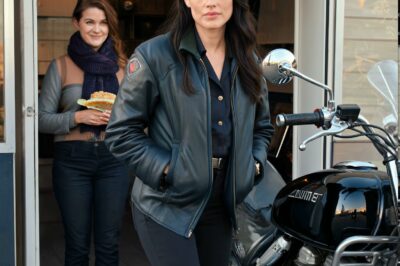
Single Dad Fixed a Stranger’s Motorbike—Unaware She Was a Billionaire Looking for Something Real! Portland rain came down in clean silver lines,
Single Dad Fixed a Stranger’s Motorbike—Unaware She Was a Billionaire Searching for Love! The late afternoon rain drummed against the…
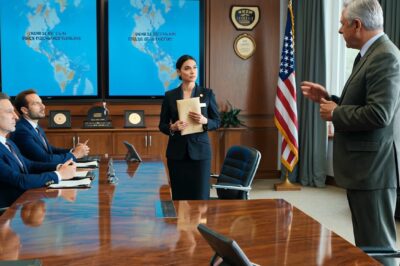
The General Talked Down to Her at Morning Briefing — Never Knowing She Was His New Commander Wood-paneled walls.
The General Humiliated Her at Morning Briefing — Never Knowing She Was His New Commander My name is Olivia Chen…
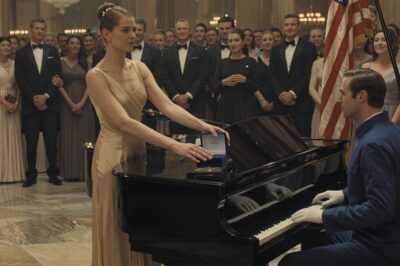
“Play This Piano, I’ll Marry You!” — Billionaire Challenged Janitor, Until He Played Like Mozart The ballroom at the Meridian Club
“Play This Piano, I’ll Marry You!” — Billionaire Mocked Janitor, Until He Played Like Mozart A billionaire mocked a…
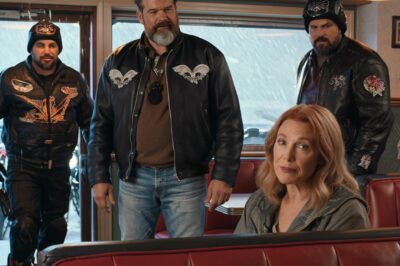
Kind Old Lady Shelters 15 Motorcycle Riders During a Snowstorm, Next Day 100 Bikes Line Up at Her Door The wind off Highway 70 sounded like it was scraping the world clean.
Kind Old Lady Shelters 15 Hells Angels During a Snowstorm, Next Day 100 Bikes Line Up at Her Door…

“You’re Not Cleared,” My General Father Raised His Voice, Tugging At My Uniform In Front Of Everyone. Until They Saw The Tattoo On My Back. Admiral Row Stood Up Slowly, His Eyes Wide With Surprise And Whispered: “Sir… She Outranks You”. My Father Went Pale
“You’re a TRAITOR,” my GENERAL father shouted, until ADMIRAL Row whispered: “She OUTRANKS you.” A decorated military officer is publicly…
End of content
No more pages to load